
Figuring out computer accessories and peripherals can feel a little tricky at first. There are so many different types, and it’s hard to know what you really need. You might wonder what makes a mouse different from a keyboard, or why a webcam is important.
Don’t worry, this guide will make it super simple. We’ll break it all down step by step so you can pick the right additions for your computer. Let’s get started and find out what’s out there!
Key Takeaways
- You will learn what computer accessories and peripherals are.
- This post explains different types of input and output devices.
- You will discover storage devices and their uses.
- We will cover networking and connectivity tools.
- This guide helps you choose the right items for your needs.
- You will understand how to get the most out of your computer setup.
What Are Computer Accessories and Peripherals
Computer accessories and peripherals are extra pieces of hardware that you connect to your computer. They help your computer do more things or make using it easier. Think of them as add-ons that boost your computer’s capabilities.
They are not part of the main computer, like the central processing unit or memory, but they work with it.
These devices let you interact with your computer in different ways. They also allow your computer to send information out to you or other devices. Understanding these items is key to building a setup that works perfectly for you, whether for work, school, or fun.
Let’s explore what makes up this category of computer gear.
Input Devices
Input devices are tools that let you send information into your computer. You use them to tell your computer what to do or to give it data. They are your main way of communicating with your PC.
Without them, your computer wouldn’t know what you want it to do.
Key input devices include keyboards and mice. Keyboards let you type words and commands. Mice let you point, click, and select items on your screen.
Other input devices like webcams capture video, and microphones capture sound. Each one serves a special purpose in getting your ideas or data into the computer.
Keyboards
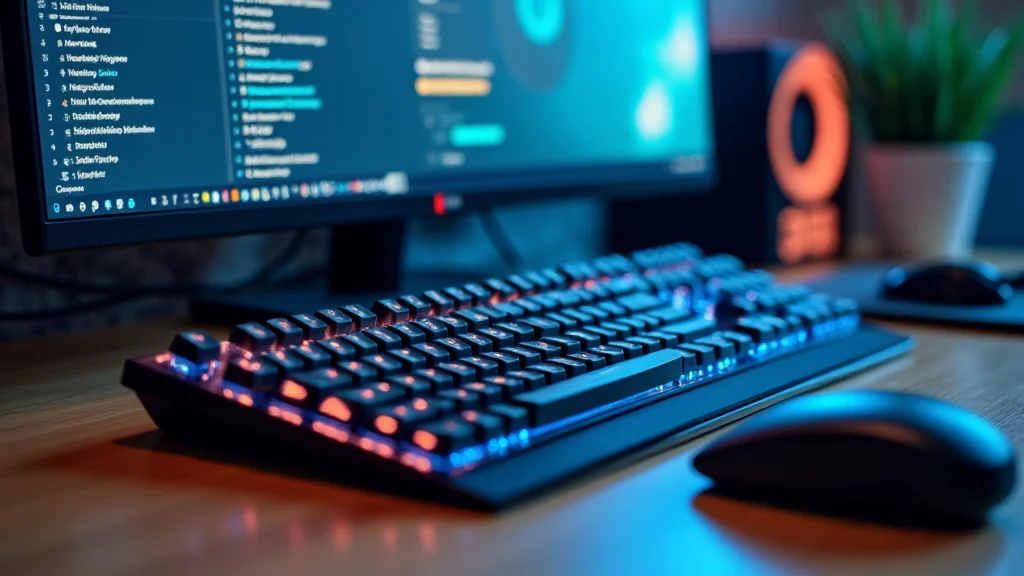
A keyboard is one of the most common computer accessories. It has many buttons, called keys, that you press. Each key represents a letter, number, or symbol.
When you press a key, it sends a signal to the computer, telling it which character to display or what command to run. Keyboards come in many sizes and styles, from simple designs to those with extra buttons for gaming or shortcuts.
Types of keyboards include membrane keyboards, which are common and affordable, and mechanical keyboards, which offer a more tactile typing feel and are popular with gamers and writers. Ergonomic keyboards are designed to reduce strain on your wrists and hands, making them great for long typing sessions. Some keyboards are wireless, connecting to your computer without cables using Bluetooth or a USB dongle.
Using a keyboard involves pressing keys in a specific sequence to form words, sentences, and commands. For instance, typing your name requires pressing the keys for each letter in order. Keyboard shortcuts, like Ctrl+C for copy and Ctrl+V for paste, can greatly speed up your work.
A standard keyboard has around 104 keys, including letters, numbers, function keys, and a numeric keypad.
Mice
A computer mouse is a pointing device that you move around on a surface. As you move the mouse, a pointer on your computer screen moves accordingly. This allows you to select items, open programs, and interact with your computer’s interface.
Most mice have at least two buttons: a left button for selecting and a right button for opening menus or options. Some also have a scroll wheel for moving up and down pages easily.
There are optical mice and laser mice, which use light to track movement. They are more precise than older ball mice. Wireless mice offer freedom from cables, connecting via Bluetooth or a USB receiver.
Gaming mice often have extra buttons, adjustable sensitivity (DPI), and ergonomic designs for comfort during long gaming sessions. Trackballs are a variation where you move a ball with your thumb or finger to control the pointer, useful for saving desk space.
Using a mouse involves actions like pointing at an icon and clicking the left button to select it. Double-clicking opens applications or files. Dragging and dropping, where you click and hold an item, move it to a new location, and release the button, is another common mouse function.
Selecting text involves clicking at the start of the text, holding the button, and dragging the cursor to the end.
Other Input Devices
Beyond keyboards and mice, many other devices allow you to input data. Webcams capture video, useful for video calls and recording yourself. Microphones convert sound waves into digital signals your computer can process, essential for voice commands, recording audio, and online communication.
Touchpads, found on most laptops, function like a mouse but are built directly into the computer’s surface.
Scanners digitize physical documents or images, turning them into files you can store and edit on your computer. Graphics tablets and styluses are used by artists and designers to draw and create digital art with precision. Game controllers provide an intuitive way to play video games, offering buttons, joysticks, and triggers.
For example, a student using a webcam for an online class can see their classmates and instructor in real-time. A musician might use a microphone to record vocals or instruments for a song. A graphic designer uses a graphics tablet to create intricate illustrations, achieving finer control than a mouse could offer.
Output Devices
Output devices are tools that allow your computer to present information to you. They take the data processed by the computer and turn it into something you can see, hear, or feel. These devices are how the computer communicates its results or displays its interface.
The most common output devices are monitors and speakers. Monitors show you what your computer is doing visually. Speakers produce sound, allowing you to hear music, dialogue from videos, or system alerts.
Printers create physical copies of documents and images.
Monitors
A monitor, also known as a display screen, is where you see everything your computer is doing. It shows text, images, videos, and the graphical user interface. The quality of a monitor affects how clear and vibrant your visuals appear.
Key specifications include screen size (measured diagonally), resolution (the number of pixels on the screen), and refresh rate (how many times the image updates per second).
Different types of monitors include LCD (Liquid Crystal Display) and LED (Light Emitting Diode) monitors, which are common. OLED (Organic Light Emitting Diode) monitors offer superior contrast and color. Curved monitors can provide a more immersive viewing experience, especially for gaming or watching movies.
High refresh rates are important for smooth motion in games and fast-paced video.
A monitor receives signals from your computer’s graphics card and translates them into the images you see. For example, when you open a web browser, the monitor displays the website’s layout, text, and images. Playing a video game involves the monitor showing fast-moving action and detailed environments.
Speakers and Headphones
Speakers convert audio signals from your computer into sound waves that you can hear. They let you enjoy music, watch movies with dialogue and sound effects, and hear notifications. Speakers come in various sizes, from small desktop units to larger sound systems.
Some are powered by the computer, while others need their own power source.
Headphones serve a similar purpose but are worn directly over or in your ears. They provide a more private listening experience and can offer better sound quality by being closer to your ears. Noise-canceling headphones are excellent for blocking out external sounds, making them ideal for travel or noisy environments.
Gaming headsets often combine headphones with a microphone.
Listening to music through speakers fills a room with sound, allowing multiple people to enjoy it. Using headphones for a late-night movie ensures you don’t disturb others. A podcast listener might use headphones to focus on the spoken content without distractions.
Printers
Printers allow you to create physical copies of digital documents and images on paper. They are essential for tasks like printing homework, reports, photos, or important documents. The two main types of printers are inkjet printers and laser printers.
Inkjet printers spray tiny droplets of ink onto the paper. They are generally more affordable to buy and good for printing photos with vibrant colors. Laser printers use a toner powder and a laser beam to fuse the image onto the paper.
They are faster and produce sharper text, making them ideal for office use and printing large volumes of documents. All-in-one printers combine printing, scanning, and copying functions in a single unit.
A student might print an essay they wrote on their computer to hand in to their teacher. A photographer could print their favorite photos to frame and display. Businesses use printers to produce invoices, marketing materials, and reports.
Storage Devices
Storage devices are where your computer keeps information, both temporarily and permanently. They hold your operating system, applications, documents, photos, and videos. Without storage, your computer couldn’t save anything, and it wouldn’t even be able to start up.
There are two main types of storage: primary (volatile) and secondary (non-volatile). Primary storage, like RAM, is fast but loses its data when the power is off. Secondary storage is slower but keeps data safe even without power.
Hard Disk Drives (HDD) and Solid State Drives (SSD)
Hard Disk Drives (HDDs) store data using spinning magnetic platters. They are traditional storage devices and are typically cheaper per gigabyte, offering large capacities. However, they are slower and more prone to mechanical failure because they have moving parts.
Solid State Drives (SSDs) store data on flash memory chips, similar to USB drives. They have no moving parts, making them much faster, more durable, and quieter than HDDs. While SSDs are generally more expensive per gigabyte, their speed significantly improves computer performance, including faster boot times and application loading.
Most modern computers use SSDs for the main operating system and frequently used programs.
An example of speed difference: booting up a computer with an SSD might take 10-20 seconds, while an HDD could take a minute or more. Opening a large application like Adobe Photoshop on an SSD can be several times faster than on an HDD.
External Storage Devices
External storage devices offer portable ways to save and transfer data. USB flash drives, also known as thumb drives or memory sticks, are small, portable devices that plug into a USB port. They are convenient for carrying files between computers or for backing up small amounts of data.
External hard drives, either HDD or SSD based, provide larger storage capacities for backing up entire systems, archiving large files, or expanding storage beyond your computer’s internal drives. They connect via USB and can be easily moved. Network Attached Storage (NAS) devices are more advanced, acting like a personal cloud storage system connected to your home network, accessible from multiple devices.
A student might use a USB flash drive to submit an assignment or share project files with a classmate. A photographer could use an external hard drive to store thousands of high-resolution photos. A family might use a NAS to store movies and photos that everyone can stream from their phones or computers.
Networking and Connectivity
Networking and connectivity accessories allow your computer to communicate with other devices and the internet. They are crucial for accessing online resources, sharing files, and connecting with others.
This category includes items like routers, modems, network cables, and wireless adapters. They form the backbone of how your computer connects to the digital world.
Routers and Modems
A modem is a device that translates signals from your internet service provider (ISP) into a format your computer can understand, and vice versa. It connects your home network to the internet. A router, on the other hand, directs traffic between your modem and all the devices on your local network (like computers, phones, and tablets).
It creates your private network and allows multiple devices to share a single internet connection.
Many home internet services provide a combined modem-router unit, often called a gateway. Wireless routers broadcast Wi-Fi signals, allowing devices to connect without cables. When choosing a router, consider factors like Wi-Fi standards (e.g., Wi-Fi 6 for faster speeds), the number of Ethernet ports for wired connections, and the range of the Wi-Fi signal.
For instance, when you want to browse the web on your laptop, the request first goes from your laptop to the router. The router then sends it to the modem, which sends it to your ISP and out to the internet. When a website sends data back, the process is reversed.
Network Cables and Wireless Adapters
Ethernet cables, also known as network cables, provide a wired connection between devices and the network. They are generally faster and more stable than wireless connections, making them ideal for devices that require high bandwidth or a consistent connection, like desktop computers or gaming consoles. Different categories of Ethernet cables (e.g., Cat 5e, Cat 6, Cat 7) offer varying speeds and performance.
Wireless adapters, or Wi-Fi cards, allow devices that do not have built-in Wi-Fi capability to connect to a wireless network. These can be internal cards installed inside a computer or external USB adapters. Bluetooth adapters enable short-range wireless communication between devices, such as connecting wireless headphones, keyboards, or speakers to your computer without needing Wi-Fi.
A gamer might connect their PC directly to the router using an Ethernet cable for the lowest possible latency during online matches. Someone using a desktop computer without built-in Wi-Fi might plug in a USB Wi-Fi adapter to connect to their home network. Pairing a wireless mouse with your laptop via Bluetooth is another common use.
Power and Protection Accessories
These accessories help manage your computer’s power supply and protect it from electrical issues.
This includes surge protectors and uninterruptible power supplies (UPS).
Surge Protectors
A surge protector is a device that guards your electronics against voltage spikes, also known as power surges. These surges can happen due to lightning strikes, power outages, or issues with the electrical grid. A surge protector diverts excess voltage away from your connected devices, preventing damage.
Most surge protectors look like power strips but have built-in circuitry to handle surges. They are rated by joules, which indicate how much energy they can absorb before failing. It’s important to replace surge protectors periodically, as they can wear out after absorbing multiple surges.
Connecting your computer, monitor, and other peripherals to a surge protector is a basic but important step in protecting your investment.
Imagine a lightning strike hits a power line nearby. Without a surge protector, the sudden jolt of electricity could travel through your wall outlet and fry your computer’s sensitive components. A surge protector would absorb most of that extra energy, saving your computer.
Uninterruptible Power Supplies (UPS)
An Uninterruptible Power Supply (UPS) is a more advanced power protection device. It contains a battery that provides temporary backup power if the main electricity supply fails. This gives you time to save your work and properly shut down your computer, preventing data loss and potential damage from sudden power loss.
Beyond battery backup, UPS units also offer surge protection. They come in different sizes and capacities, measured in volt-amperes (VA). The capacity you need depends on the total power draw of the devices you connect to it.
For critical workstations or servers, a UPS is essential for business continuity and data integrity.
If your office experiences a brief power outage, your computer connected to a UPS will continue to run on battery power. This allows you to finish saving your document, close all your applications safely, and then shut down your computer gracefully. This avoids the risk of losing hours of work or corrupting files.
Choosing the Right Computer Accessories and Peripherals
Selecting the best computer accessories and peripherals depends on what you do with your computer. Think about your main activities: are you a student, a gamer, a creative professional, or do you use your computer for everyday tasks like browsing and email?
Your budget is also a key factor. Many great accessories are affordable, while high-end options can be an investment. It’s helpful to prioritize what will make the biggest difference in your daily computer use.
Identify Your Needs
Start by thinking about what tasks you perform most often. If you write a lot, a comfortable and responsive keyboard might be your top priority. If you work with images or videos, a high-resolution monitor and a precise mouse are important.
For gaming, a fast graphics card, a high-refresh-rate monitor, and a gaming mouse are essential.
Consider the space you have available. A large gaming keyboard might not fit on a small desk. Similarly, if you have limited space, a compact wireless keyboard and mouse combo could be ideal.
Don’t forget about ergonomics; accessories that promote good posture can prevent strain and discomfort over time.
For example, a graphic designer needs a monitor with excellent color accuracy to ensure their digital work translates well to print. They might also prefer a graphics tablet over a standard mouse for detailed work. A gamer needs a low-latency mouse and keyboard, and possibly a headset for in-game communication.
Examples of Needs-Based Choices
- For Students: A reliable webcam for online classes, a comfortable keyboard for writing papers, and sufficient storage for assignments and research. A good pair of headphones for studying.
- For Gamers: A high-refresh-rate monitor for smooth visuals, a low-latency gaming mouse and keyboard with customizable buttons, and a quality headset for immersive sound and communication.
- For Content Creators: A color-accurate monitor, a powerful graphics card, a fast SSD for quick editing, and a high-quality microphone for voiceovers.
- For Office Work: An ergonomic keyboard and mouse to prevent strain, a large monitor or dual monitors for multitasking, and a good printer for documents.
Budgeting for Accessories
It’s easy to get carried away with all the available gadgets. Set a budget before you start shopping. You can often find good quality accessories at reasonable prices.
For example, you don’t always need the most expensive keyboard to type comfortably.
Prioritize purchases. If your computer’s storage is full, that’s probably a more urgent need than a fancy RGB mouse. Look for sales and consider refurbished items, which can offer significant savings.
Remember that sometimes, a simple upgrade like adding an SSD can make a huge difference for a low cost.
For instance, instead of buying a brand-new, top-of-the-line external hard drive, you might find a slightly older model that still offers plenty of space at a fraction of the price. Similarly, a solid mid-range webcam can provide excellent quality for video calls without breaking the bank.
Reading Reviews and Comparing Products
Before buying any computer accessory or peripheral, it’s wise to read reviews from other users. Websites like Amazon, tech blogs, and online forums are great places to find honest opinions. Look for consistent feedback regarding performance, durability, and ease of use.
Compare specifications and prices across different brands and models. Don’t just go for the cheapest option; consider the value it offers. A slightly more expensive product might last longer or perform better, saving you money in the long run.
Websites that offer side-by-side comparisons can be very helpful.
Suppose you are looking for a new monitor. You might read reviews that mention poor color reproduction or a washed-out display on one model, while another model is praised for its sharp image and vibrant colors, even if it costs a bit more. This kind of information helps you make an informed decision.
Common Myths Debunked
Myth 1: You need the most expensive accessories for the best performance
Reality: While premium accessories often offer advanced features and superior build quality, you can achieve excellent performance with mid-range or even budget-friendly options. Many affordable peripherals perform just as well as their expensive counterparts for everyday tasks. The key is to match the accessory’s features to your specific needs rather than assuming price equals performance for everyone.
Myth 2: All external hard drives are the same
Reality: External hard drives vary significantly in speed, capacity, durability, and connection type. Solid State Drives (SSDs) are much faster than traditional Hard Disk Drives (HDDs). Connection types like USB 3.0 or USB-C offer faster data transfer rates than older USB versions.
Choosing the right type depends on whether you prioritize speed, capacity, or portability.
Myth 3: Wireless accessories are always less reliable than wired ones
Reality: Modern wireless technology, especially through Bluetooth and advanced Wi-Fi protocols, is highly reliable. For most users, wireless accessories like mice, keyboards, and headphones offer convenience without a noticeable drop in performance or reliability compared to wired options. Wired connections still offer the absolute lowest latency, which is critical for competitive gaming or professional audio work, but for general use, wireless is often more than sufficient.
Myth 4: You only need a surge protector for storms
Reality: Power surges are not solely caused by lightning. They can occur due to various factors, including the cycling of large appliances (like air conditioners) in your home, or even fluctuations from the power grid. Surge protectors offer continuous protection against these common, everyday voltage spikes, helping to extend the lifespan of your electronics.
Frequently Asked Questions
Question: What is the difference between a peripheral and an accessory?
Answer: In common usage, these terms are often used interchangeably. Generally, peripherals are devices that are essential for the computer to function in a specific way, like a keyboard or monitor. Accessories are often considered optional add-ons that enhance functionality or convenience, like a webcam or a printer.
Question: Do I need to install drivers for all computer accessories and peripherals?
Answer: Most modern operating systems (like Windows and macOS) have built-in drivers that automatically recognize and install for many common peripherals. However, some specialized devices, like high-end printers, scanners, or gaming peripherals, might require you to install specific drivers from the manufacturer’s website for full functionality or advanced features.
Question: How can I tell if my computer is compatible with a new peripheral?
Answer: Check the peripheral’s product specifications for system requirements. This usually includes the operating system version it supports (e.g., Windows 10, macOS Monterey) and the type of connection it uses (e.g., USB-A, USB-C, HDMI). Ensure your computer has the necessary ports and meets the software requirements.
Question: Is it better to buy a wired or wireless mouse?
Answer: For general use, both are fine. Wireless mice offer convenience and a cleaner desk setup. Wired mice often have lower latency, which is preferred by serious gamers.
If you travel a lot or have a minimalist setup, wireless is great. If you want the most responsive experience and don’t mind the cable, wired is a solid choice.
Question: What is the main purpose of a UPS for a computer?
Answer: A UPS provides battery backup power during an electrical outage. This allows you to save your work and shut down your computer properly, preventing data loss and potential damage to the system that can occur from an abrupt power loss. It also typically includes surge protection.
Conclusion
Selecting computer accessories and peripherals is about finding the right tools for your tasks. From input devices like keyboards and mice to output devices like monitors and speakers, each piece plays a role. Storage options like SSDs and HDDs keep your data safe, while networking items connect you to the world.
Power protectors add an extra layer of safety. By understanding your needs and comparing options, you can build a computer setup that works perfectly for you.